


Welcome (soon to be?) Data Scientists! Congrats on being invited to a Data Science Interview 🎉Your hard work has finally paid off, but now it's time to face off against the hardest obstacle of all.
I'm sure you're head is filled with questions:
Lucky for you I’m an expert on all things Data Science (I even wrote an Amazon best seller called Ace the Data Science Interview!) and here to answer the most frequently asked questions about all things Data Science Interview.

Interviews may include technical assessments (coding challenges, data analysis tasks), case studies, behavioral interviews, and sometimes take-home assignments or presentations.
Prepare by reviewing fundamental concepts in statistics, probability, and linear algebra. Practice coding in Python or R, and understand common machine learning algorithms and when to use them. Additionally, be ready to discuss your previous projects and experiences in data science.
Technical questions may cover data manipulation, statistical analysis, machine learning algorithms, coding challenges, and possibly questions related to databases, data structures, or algorithm design.
Employers often seek proficiency in programming languages like Python or R, knowledge of statistical analysis, machine learning techniques, data manipulation, and visualization tools like Pandas, NumPy, sci-kit-learn, and matplotlib or ggplot2.
Want to up your Python and SQL skills? Check out datalemur.com and use their interactive and FREE platform to prepare for the Data Science Interview.
Time management is crucial in technical interviews. Practice solving coding challenges and data analysis tasks within time constraints. Break down the problem into smaller steps, prioritize tasks, and focus on the most critical aspects first. Don't hesitate to ask clarifying questions if needed.
Expect questions about your problem-solving approach, teamwork, communication skills, and how you handle challenges or conflicts in a project. Employers may also inquire about your experience with specific tools or techniques and how you've applied them in past projects.
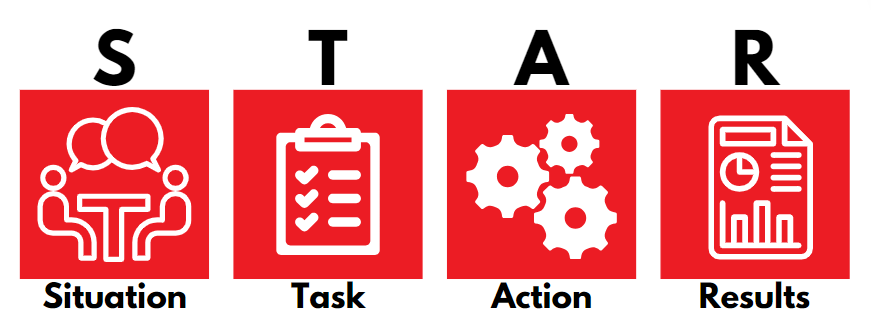
To read about STAR method and other ways to crush the Data Science Behavioral Interview read this guide here.
A balance of both is crucial. Understand the theory behind algorithms and statistical methods, but also be proficient in applying them to real-world datasets. Employers often value candidates who can demonstrate practical problem-solving skills.
Effective communication is vital for conveying complex technical concepts to non-technical stakeholders. Be prepared to articulate your findings, methodologies, and insights clearly and concisely. Practice presenting your past projects and explaining technical concepts to a lay audience.
Read the instructions carefully, understand the problem statement, and clarify any doubts before starting. Focus on providing clear explanations of your thought process, assumptions, methodology, and results. Ensure your solution is well-documented and presented professionally.
Be honest about your limitations. Walk the interviewer through your thought process, discuss any relevant concepts you know, and explain how you would approach finding a solution. Interviewers often value problem-solving skills and adaptability more than knowing all the answers.
Discuss your personal projects, open-source contributions, participation in data science communities, or any relevant certifications or courses you've completed. Show enthusiasm for learning and applying data science techniques to solve real-world problems.
Remember, preparation, practice, and confidence are key to succeeding in data science interviews.
Data science is a rapidly evolving field, so staying updated on new techniques, tools, and research is essential. Employers may ask about your efforts to keep learning, such as attending conferences, reading research papers, or participating in online courses.

Data scientists are in demand across various industries, including technology, finance, healthcare, e-commerce, and telecommunications, as companies seek to leverage data-driven insights for decision-making and innovation. Additionally, emerging sectors such as renewable energy, transportation, and education are increasingly recognizing the value of data science expertise.
Avoid overselling your skills or experience, being unprepared for technical questions, neglecting to ask clarifying questions, or failing to communicate effectively. Also, refrain from providing vague or generic responses; instead, provide concrete examples and demonstrate your expertise.
Some recommended resources and online courses for learning data science include platforms like Coursera, DataLemur, and Leetcode which offer courses covering various aspects of data science, machine learning, statistics, and programming. Additionally, there are numerous free tutorials, blogs, and textbooks available online for self-paced learning.
Not sure which online resource to start with? Read this DataLemur vs. Leetcode for SQL Interviews guide to help start your Data Science journey.
Also, review company-specific information and job descriptions to tailor your preparation.
Prepare thoughtful questions about the company culture, team dynamics, potential projects, growth opportunities, and the company's approach to data science. Trust me… DO YOUR RESEARCH. Asking insightful questions demonstrates your interest in the role and helps you assess whether the company is the right fit for you.
Send a thank-you email to the interviewer(s) within 24-48 hours expressing your gratitude for the opportunity and reiterating your interest in the position. If there were any topics you didn't get a chance to discuss during the interview, you can mention them briefly in your follow-up message.


